The push for a more sustainable and circular textile industry
The European Union (EU) is advocating for a more sustainable and circular strategy for textiles. One of the initial steps is implementing a ban on the destruction of unsold textiles, scheduled for large companies in 2026 and for medium-sized ones in 2030. Additional key actions in the EU’s sustainable and circular textiles by 2030 strategy include setting design requirements for recyclability, specifying minimum recycled content and introducing a Digital Product Passport (DPP).
Most major brands already promote the use of recycled content prominently on their labels and other product information channels. Recycled polyethylene terephthalate (rPET) from post-consumer bottles and recycled polyamide (rPA) from sources such as fishing nets and industrial scrap are used in sportswear, swimwear, athleisure, and technical textiles. The introduction of DPPs aims to increase transparency, prevent greenwashing, and promote greater circularity.
What are Digital Product Passports (DPP) and what is the deadline for textiles?
Under the Ecodesign for Sustainable Products Regulation (ESPR), every product sold in the EU will eventually need a digital record containing verified information about its composition, origin, manufacturing processes, environmental impact, and end-of-life guidance. Specific data requirements for each product category will be defined in a delegated act.
The delegated act for textiles is expected to be confirmed in 2027, with a minimum transition period of 18 months for brands to comply with its requirements. In addition to gathering all needed information across multiple stakeholders and complex supply chains, brands will need a traceability system that verifies the correctness of the information for each stock-keeping unit (SKU).
This is where Avient’s Cesa™ Fiber Tracer Concentrates can help.
What information is expected for textile DPPs?
Based on current regulatory signals and stakeholder consultations, textile DPPs are expected to include the following categories of information, among others:
- Fiber composition with percentage of recycled content by weight
- Country of manufacturing with possible identification of where key production steps occurred, including spinning, weaving or knitting, dyeing, finishing, and garment assembly.
- Supply chain traceability data under recognized schemes such as the Global Recycled Standard (GRS) or Recycled Claim Standard (RCS)
How can fiber taggants support label claims and DPP information?
Taggants, also called tracers, are substances incorporated into a product to mark it. Specific testing along the supply chain confirms their presence, substantiating the origin of the yarn to the taggant’s specified fiber manufacturer and production line. The fiber producer can then confirm DPP information — e.g., fiber composition, compliance with manufacturing standards, dyeing process — using relevant documentation from suppliers and standards bodies. Examples of label claims that can be supported with fiber taggants include:
- Fibers containing recycled materials
- Fibers produced in a specific country or region
- Use of a more sustainable dyeing process like spin-dyeing (dope-dyeing)
How do Cesa™ Fiber Tracer Concentrates work?
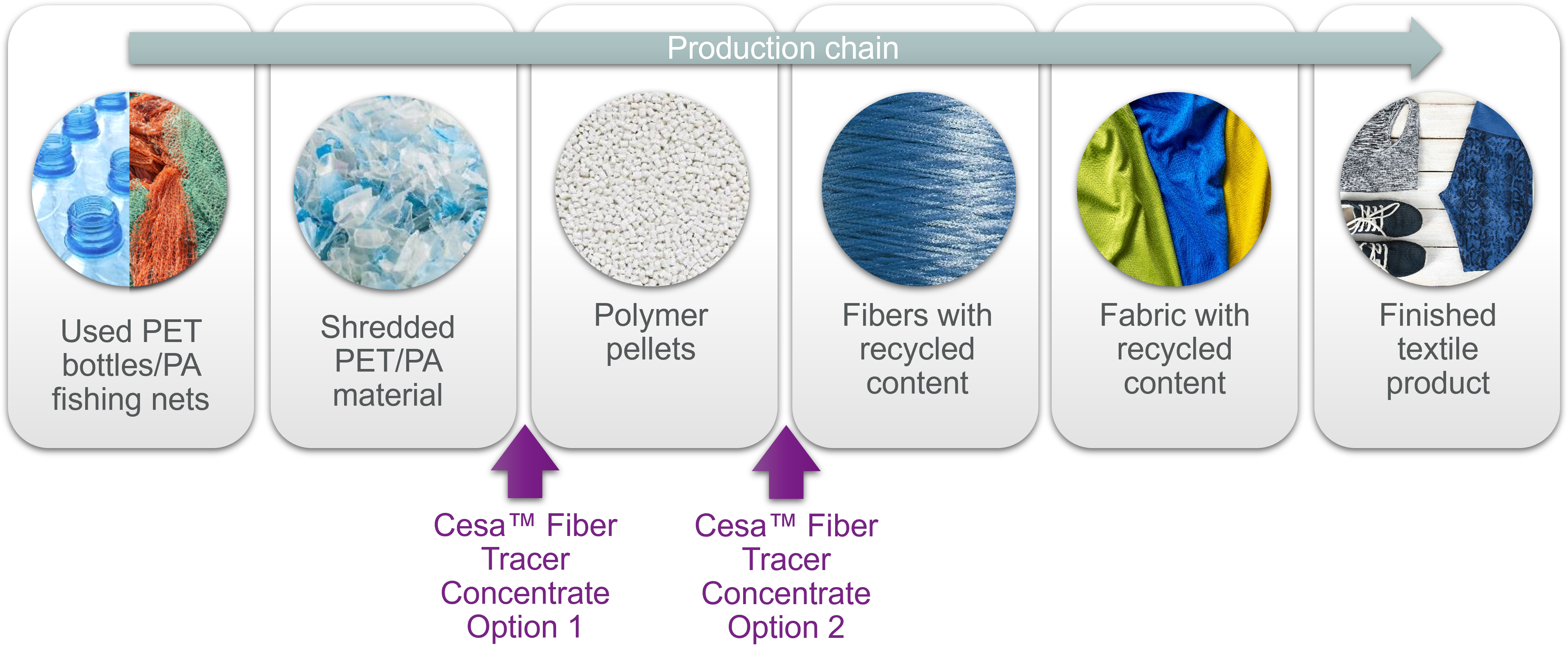
Cesa™ Fiber Tracer Concentrates from Avient are developed for extruded synthetic fibers, specifically polyester and polyamide (nylon), including recycled grades. Like other Cesa fiber concentrates (also known as masterbatches), they are typically incorporated into the fiber during yarn extrusion.
For recycled polymer content, the tracer pellets can also be added to shredded rPET bottle flakes or rPA fishing-net material before their extrusion into yarns, which can offer more flexibility for yarn producers.
What are the key benefits of Cesa™ Fiber Tracer Concentrates?
- Unique and personalized: Each tracer is configured for a specific customer or product line
- Compatible: No impact on spinnability, color, or yarn properties
- Compliant: Formulated without hazardous raw materials; complies with key fiber-industry requirements under EN, DIN, and UNI standards
- Convenient: Can be combined with color into a single concentrate to simultaneously dye and incorporate the taggant into the yarn during its extrusion
Because Cesa Fiber Tracer Concentrates rely on a chemical marker rather than embedded electronics or specialized equipment at the spinning line, they represent a low capital investment.
How Cesa™ tracers compare with other taggant technologies
The taggant market includes forensic markers, DNA-based codes, fluorescent compounds, and digital-physical hybrids. Each carries trade-offs in capital cost, reader infrastructure, and traceability depth.
Cesa Fiber Tracer Concentrates occupy the medium-traceability, low-investment segment:
- No additional equipment required
- Analytical testing service package available
- Compatible with recycled polyester and polyamide feedstocks
- Possibility to combine with color in a spin-dyeing (dope-dyeing) masterbatch
For fiber producers and brands beginning to substantiate recycled-content claims, this profile supports a phased rollout: start with priority product lines, generate verifiable test data, and scale across the portfolio as DPP deadlines approach.
Conclusion
Cesa™ Fiber Tracer Concentrates provide medium-level traceability for recycled polyester and polyamide with low investment, full compatibility with existing spin-dyeing lines, and a testing service package to substantiate origin claims and thereby verify DPP information. As regulators, retailers, and consumers tighten scrutiny of recycled-content marketing, embedding taggants in evergreen yarns and priority textile products as soon as possible is a practical first step toward DPP-ready traceability.